
Slip and Fall Accident Lawyer in Santa Ana, CA (Premises Liability Claims)
Work With a Premise Liability Lawsuit Expert
Slip and fall accidents often look simple from the outside, but premises liability claims rarely follow a simple path. A property owner’s insurance company will usually focus on one question: Did the owner act reasonably to prevent or address a dangerous condition? California law places a broad duty of care on property owners and occupiers, but an injured person still must prove liability with evidence.
This page explains how California premises liability works, what conditions commonly cause slip and fall injuries in Santa Ana, how you can prove negligence, and what deadlines apply, especially when a public entity owns or controls the property.
Request a Free Case Evaluation
What qualifies as a slip and fall accident under California premises liability law?
A slip and fall claim typically arises when a dangerous condition on the property, such as a spill, uneven surface, poor lighting, or broken stairs, causes a person to fall and sustain an injury. California courts analyze these claims under general negligence principles and premises liability standards, including the elements reflected in California Civil Jury Instructions (CACI) for premises liability and the California Courts Civil Jury Instructions Resource Center.
California’s baseline duty of care comes from Civil Code section 1714, which establishes that people generally must exercise ordinary care to avoid causing harm.
Who can be held liable for a slip and fall in Santa Ana?
Liability depends on who owned, leased, occupied, or controlled the property and who had the responsibility to fix or warn about hazards. CACI premises liability instructions focus on control and negligent maintenance or management of the property.
Commercial property owners and businesses
Businesses open to the public typically must inspect for hazards with reasonable frequency, clean spills, and address dangerous conditions promptly and post warnings when they cannot immediately fix the hazard.
Examples include retail stores, shopping plazas, hotels, gyms, and restaurants.
Landlords and residential property managers
Landlords and property managers may bear responsibility for common areas and building conditions, such as:
- Stairways and handrails
- Entryways and walkways
- Parking lots and shared corridors
- Lighting and maintenance standards
Contractors and maintenance vendors
A third-party cleaning company, maintenance contractor, or security vendor may share responsibility for a hazard created or worsened by their work.
Public entities (government-controlled property)
Government-related claims follow different rules and deadlines. If you fall on property owned or controlled by a city, county, school district, or another public entity, you may need to comply with California’s Government Claims Act procedures.
Why slip and fall accidents happen in Santa Ana
Santa Ana includes a wide mix of public and private spaces such as shopping centers, apartment complexes, restaurants, older commercial buildings, parking lots, sidewalks, and public facilities. Slip and fall hazards often appear when owners fail to inspect, maintain, repair, or warn.
Common conditions include:
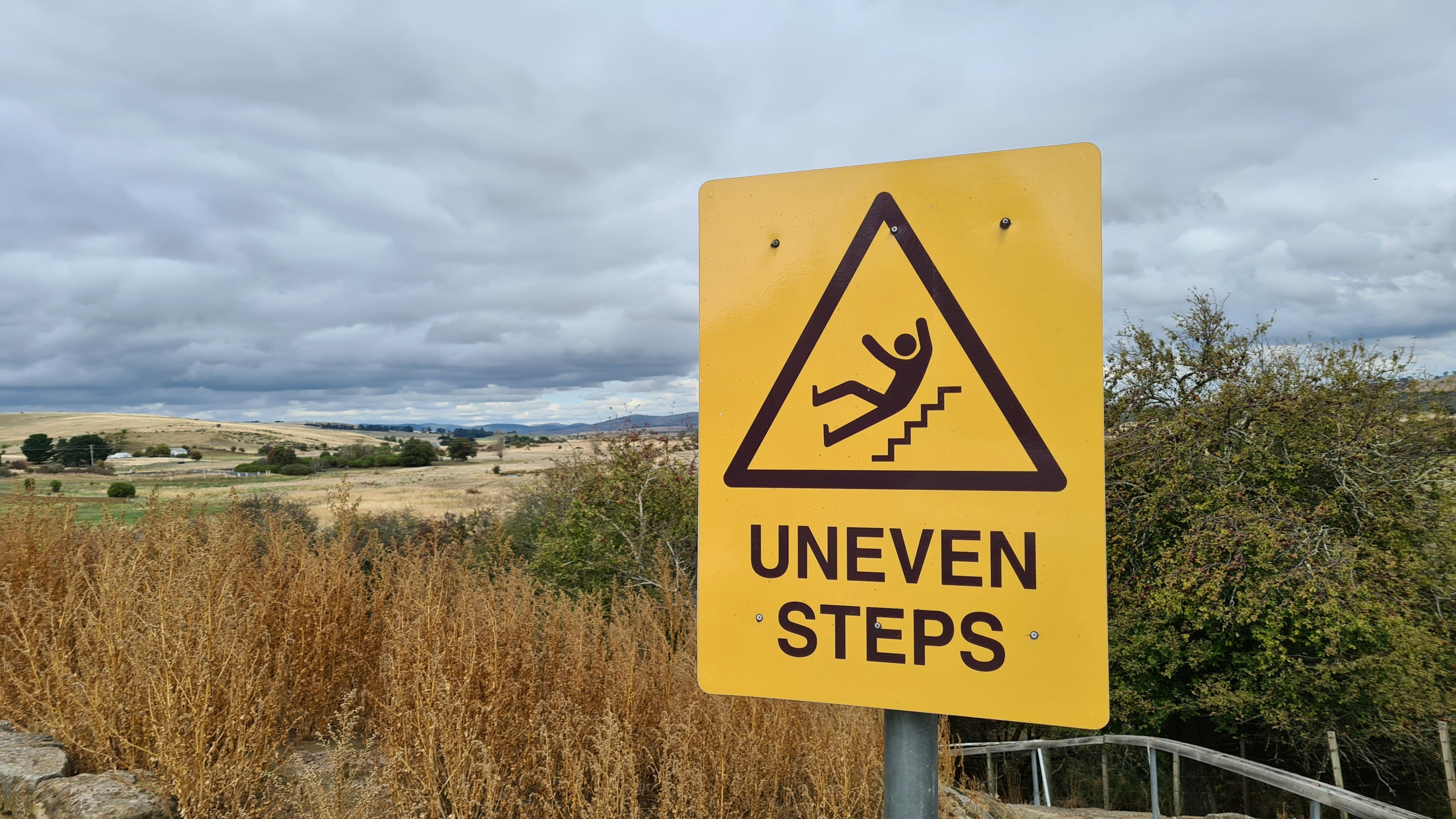
- Wet floors in grocery stores, restaurants, and retail entrances
- Uneven pavement in parking lots and walkways
- Broken or loose stair treads and missing handrails
- Poor lighting in hallways, stairwells, and parking structures
- Loose mats or curled carpeting at entrances
- Cracked sidewalks and uplifted concrete near curbs
For sidewalk and street-related issues, the City of Santa Ana publishes repair and maintenance information and reporting options through its Public Works resources.
How do you prove negligence in a California slip and fall case?
A successful premises liability claim usually requires proof of the core negligence elements reflected in CACI instructions.
- The property owner owed a duty of care
- A dangerous condition existed
- The owner failed to act reasonably (fix, clean, repair, or warn)
- That failure caused your fall and injuries
California Civil Code § 1714 provides the foundation for the duty of care in negligence claims.
The “notice” issue: actual notice vs. constructive notice
Insurance companies often defend slip and fall claims by arguing, “We didn’t know about the hazard.” You can still prove liability if you show that the owner should have known about the condition and would have discovered it through reasonable inspection.
Evidence that helps prove notice includes surveillance video showing how long a spill existed, inspection logs or cleaning schedules, employee statements about staffing and maintenance, prior complaints or repair requests, and photos of deterioration suggesting long-term neglect.
Common slip and fall hazards and how they establish liability
Certain hazard categories repeatedly appear in strong premises cases:
Wet floors and spills
Owners should respond quickly to spills in high-traffic areas. They should use warning cones or signs when they cannot immediately clean or dry surfaces.
Uneven surfaces and sidewalk defects
Trip and fall claims often involve cracks, uplifted concrete, potholes, or broken curbs. When a public sidewalk contributes to the fall, Santa Ana’s street and sidewalk repair resources help establish that the city tracks these conditions and accepts reports.
Stairs, handrails, and lighting
Poor lighting and missing handrails reduce safety on stairs and increase fall risk, especially for older adults and visitors unfamiliar with the property layout.
Injuries slip and fall accidents often cause
Slip and fall accidents can cause serious harm, especially when the person falls backward, strikes their head, or lands awkwardly.
Common outcomes include head trauma and concussions, fractures (wrists, ankles, ribs, hips), back and neck injuries, knee and shoulder injuries, or soft-tissue damage requiring prolonged therapy.
Falls remain a major public health issue, and federal agencies track fall injury impacts and trends. The National Institute on Aging also highlights how slippery surfaces and unsafe walking conditions increase fall risk, especially for older adults.
What to do after a slip and fall in Santa Ana
You can protect your health and your potential claim by acting quickly.
- Get medical care immediately. Medical records connect your injuries to the fall and establish severity.
- Report the incident right away. Ask the property owner or manager to create an incident report.
- Photograph the hazard and the surrounding area. Capture lighting, warning signs (or lack of them), wet floor conditions, uneven surfaces, and the path of travel.
- Collect witness information. Witnesses often leave quickly, especially in retail settings.
- Preserve the evidence you control. Keep the shoes and clothing you wore and save any receipts or documentation showing you had a lawful reason to be on the property.
- Avoid recorded statements to insurers before you understand liability issues. Insurers often use early statements to shift fault or minimize damages.
If the fall occurred on a sidewalk or street condition maintained by the City, the city’s Public Works reporting resources show the types of sidewalk and street repair services it manages.
Deadlines for slip and fall claims in California
Standard personal injury deadline (most private-property cases)
California generally requires you to file most personal injury lawsuits within two years. California’s personal injury statute of limitations appears in Code of Civil Procedure section 335.1.
Government property deadline (public entity claims)
Claims against public entities often require you to present a government claim within a shorter timeframe. Government Code section 911.2 sets a key time requirement for presenting claims to public entities. Local government resources also summarize the Government Claims Act process and typical response timelines.
Because deadlines and procedures can vary by entity, you should treat a government-property fall as time-sensitive.
How a Santa Ana slip and fall lawyer helps with premises liability
Slip and fall claims often require targeted evidence that a victim cannot easily obtain without legal pressure. A personal injury lawyer can help by:
- Identifying the correct liable parties (owner, tenant, property manager, contractor)
- Securing surveillance footage before it disappears
- Requesting cleaning logs, maintenance records, and inspection schedules
- Documenting the hazard and preserving expert evidence when necessary
- Handling insurance communication and claim valuation
- Building the liability framework consistent with California duty-of-care standards and CACI premises liability instructions.
Contact a slip and fall attorney in Santa Ana, CA
Slip and fall accidents often lead to disputes over notice, maintenance, and responsibility. When a dangerous condition causes injuries, you can strengthen your claim by documenting the hazard, seeking prompt medical care, and acting before key evidence disappears.
If you suffered injuries in a slip and fall accident in Orange County, consider speaking with a premises liability lawyer in Santa Ana, CA, with Kim Law, who can evaluate the property conditions, identify liable parties, and guide you through California’s deadlines and claim requirements.